From Hubei Daily (Reporter Li Yulin, Contributor Hu Yun)
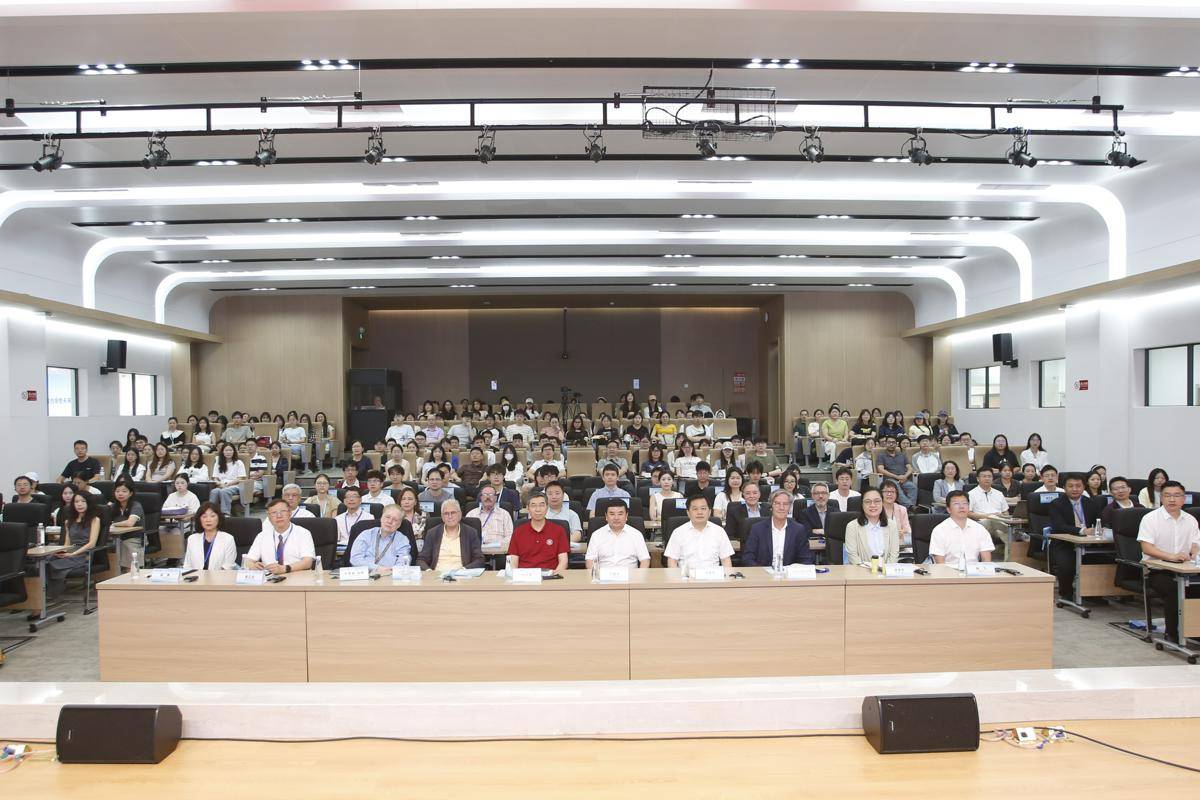
As part of China’s efforts to advance biomanufacturing,the 2026 Sino-European Life Science Forum and the 15th International Conference on Nucleic Acid Synthetic Biology was held at Hubei University on June 27. Nearly 200 global experts and industry representatives in life sciences from China, Europe and across the globe assembled in Wuhan for academic discussions covering nucleic-acid synthesis, gene editing and green biomanufacturing. At the forum, participating delegates agreed to jointly build a transnational industry-university-research collaborative innovation platform for synthetic biology.
In recent years, synthetic biology and biomanufacturing have registered rapid and remarkable development. Several distinguished experts took the floor, including Fellow of the Royal Society David M. J. Lilley and Xian-En Zhang, Dean of the Faculty of Synthetic Biology, Shenzhen University of Advanced Technology They delivered keynote addresses covering cutting‑edge topics, including AI‑empowered life sciences, cell therapy and nanobiomaterials. Following field visits to three local biomedical enterprises in Wuhan, Chinese and foreign experts highly commended Hubei’s achievements in biomanufacturing.
Senior officials of Hubei University noted that drawing on stable collaborative mechanisms with the Sino-European Federation for Life Sciences (SEFL) and top-tier European universities, the university will deepen Sino-European cooperation in life science, prioritize the development of joint R&D platforms, launch the China-EU Elite Program in Life Sciences and cross-border joint training bases, and take the lead in improving a full-chain sci-tech achievement transformation system to ensure that landmark scientific achievements are applied in Hubei.
It is reported that Hubei University has attained fruitful outcomes in research, teaching and industrial application of synthetic biology and biomanufacturing. In 2025, the Ministry of Industry and Information Technology selected the first batch of 43 national‑level biomanufacturing pilot‑scale capacity‑building platforms, among which only four Chinese universities were selected, and Hubei University was one of them.







 Contact Us
 Alumni
 Chinese
